
Fulbright Specialist Nancy Cheng teaches sustainable design, collaborates with students and professionals, explores opportunities for timber construction.
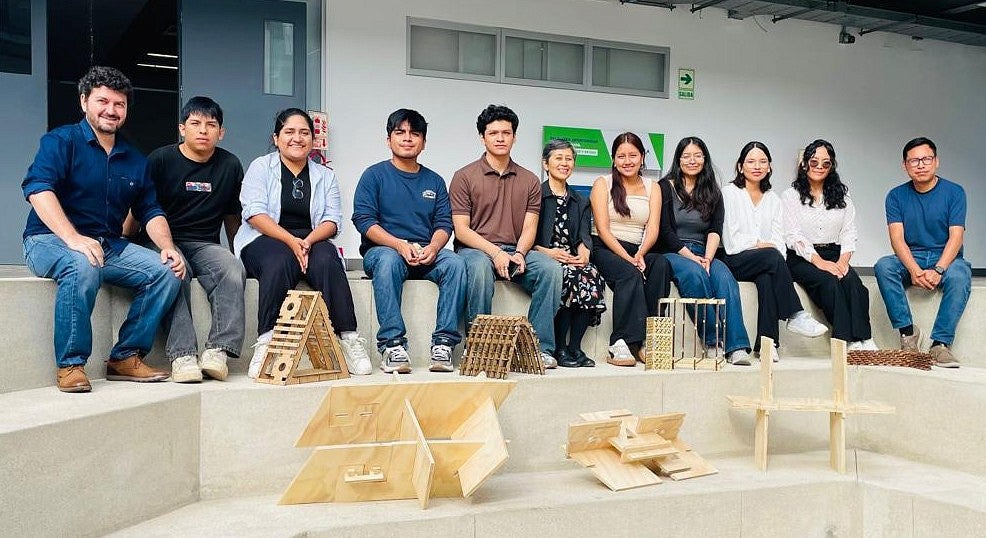
Nancy Cheng, professor emerita in the School of Architecture and Environment, spent six weeks last winter sharing her expertise in timber building design and architectural education as a Fulbright Specialist at Universidad Cientifica del Sur in Lima, Peru.
“Wood is a sustainable, renewable resource that can be flexibly machined into many different forms, encouraging the designer’s imagination.” Cheng said.
In Peru, she spoke about how mass timber, engineered panels, beams and columns, could be used for building structures instead of the more conventional energy-intensive steel or concrete.
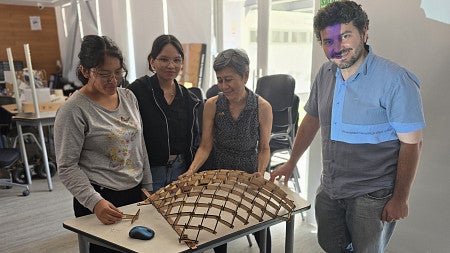
“Well-designed mass timber buildings can withstand earthquakes and fires. In a fire, a protective layer of char forms so that the underlying structure can remain stable. And with computerized prefabricated pieces, mass timber can be assembled quickly, without the waiting time for concrete slabs to cure,” she said.
Peruvians traditionally build with masonry blocks within concrete structural frames, using wood for finish materials, furnishings, or temporary construction. Limited forest management and the high cost of importing mass timber have slowed adoption, despite Peru’s extensive forest resources.
Cheng is a faculty collaborator at the Tallwood Design Institute, a partnership between the University of Oregon’s College of Design and Oregon State University’s colleges of Forestry and Engineering, which has been at the forefront of mass timber research, design and implementation.
While in Peru, Cheng engaged in activities that supported educational exchange, sustainable design practice, and professional collaboration.
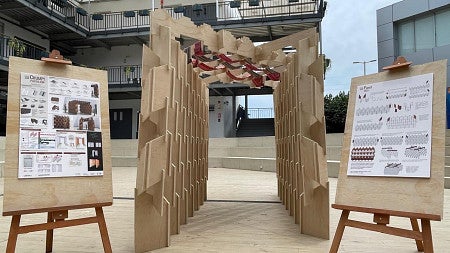
She taught a design-build studio on lightweight timber construction, where students learned computational design methods and collaboratively designed, detailed, and assembled a small, lightweight plywood pavilion. The course was built on the unique two- university Timber Tectonics digital collaboration with Oregon State University Professor Mariapaola Riggio. Built from reusable, modular components, the project helped students develop technical skills while exploring broader questions of sustainability and resource stewardship.
The pavilion's design drew inspiration from Peruvian textile patterns, using interlocking modular wood panels cut using a computerized router. The project helped students develop digital fabrication and construction skills while exploring sustainable strategies such as design for re-use and cultural heritage.
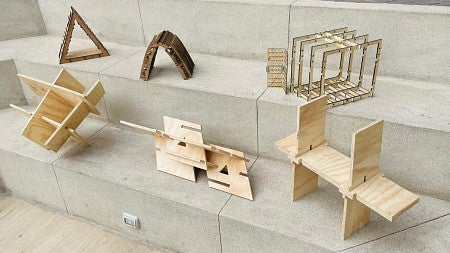
Beyond the studio, Cheng worked with faculty to support revisions to the university's basic design curriculum. In a public lecture, she demonstrated how simple operations, such as cutting, folding, and joining wood and paper, can be used to create elegant three-dimensional forms for interior and architectural design.
Cheng also engaged with Peruvian design professionals to exchange ideas about sustainable architecture and timber construction. She presented to an architecture firm, delivered three live-streamed public lectures, met with sustainable property developers, and attended the rollout of the Peru Green Building Council’s strategic plan.
Cheng said her experience in Peru deepened her understanding of Peru’s cultural heritage and the challenges and opportunities of rapid contemporary development.
“Looser rules allow more rapid entrepreneurial efforts, and building can happen quickly,” she said. “On the other hand, without standardization, processes and quality can be uncertain, leaving informal settlements of unreinforced masonry vulnerable.”
Cheng was named a Fulbright Specialist in December by the U.S. State Department and the Fulbright Foreign Scholarship Board. About 400 U.S. citizens are selected annually for the Fulbright Specialist Program, based on academic and professional achievement, leadership, and potential to foster long-term international cooperation.
Through her experience with the. Program, Cheng hopes to build lasting connections and encourage broader adoption of sustainable timber construction beyond the Pacific Northwest.
-Tim Christie
Office of the Provost